 Ohne Anstehen buchbar
 Die Villa dei Papiri und die Herculaneum-Schriftrollen
Die teilweise ausgegrabene römische Luxusvilla in Herculaneum, die verkohlte Bibliothek mit 1.800 Schriftrollen, die 1750 entdeckt wurde, und die modernen Röntgen- und KI-Techniken, die sie nach 1.900 Jahren endlich entrollen.
Die Villa dei Papiri – die Villa der Papyri – ist die außergewöhnlichste archäologische Entdeckung aus Herculaneum und wohl aus der gesamten antiken Welt. Eine riesige römische Luxusvilla am Stadtrand, ab 1750 unter Karl III. von Bourbon teilweise durch Tunnel ausgegraben, brachte die einzige intakte antike Bibliothek zutage, die die Antike überdauert hat: rund 1.800 Papyrusrollen, die durch denselben pyroklastischen Strom verkohlt wurden, der die Stadt begrub. Fast drei Jahrhunderte lang waren die Rollen unlesbar. Im Jahr 2023 begann die Vesuvius Challenge, bahnbrechende Ergebnisse zu veröffentlichen, die mittels Röntgentomographie und maschinellem Lernen die Rollen virtuell entrollen, ohne sie physisch zu öffnen – und der erste vollständige Text einer vergrabenen Rolle ist nun gelesen. Dieser Leitfaden erklärt die Villa, die Bibliothek und den modernen Durchbruch, der uns endlich lesen lässt, was Roms wohlhabendster Leser am Nachmittag des Vulkanausbruchs las.
Die Villa selbst
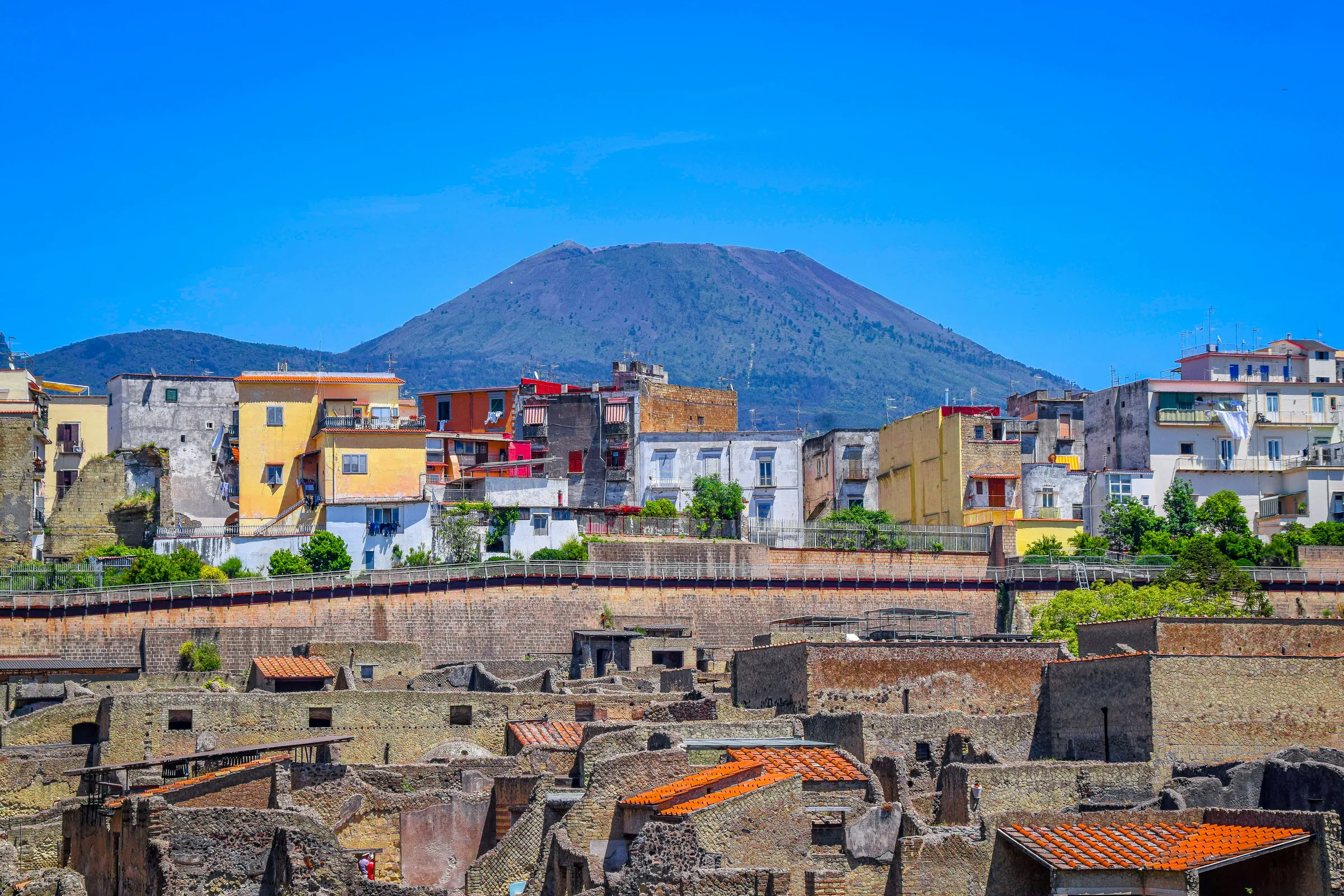
Die Villa dei Papiri liegt am Rande des antiken Herculaneum, teilweise ausgegraben und größtenteils noch unter dem modernen Ercolano begraben. Die Villa war eine kolossale römische Luxusresidenz mit einer Grundfläche von etwa 250 Metern entlang ihrer Längsachse, angelegt um mehrere große Peristylgärten, Zierteiche, einen umfangreichen privaten Badekomplex und Dutzende dekorierte Empfangsräume. Römische Luxusvillen dieses Ausmaßes sind normalerweise nur aus literarischen Quellen bekannt; die Villa dei Papiri ist das vollständigste erhaltene physische Beispiel aus der römischen Welt und gibt uns das klarste Bild der architektonischen Sprache des spätrepublikanischen und frühkaiserzeitlichen römischen Elite-Wohnlebens. Die Villa war mit ziemlicher Sicherheit das Eigentum von Lucius Calpurnius Piso Caesoninus, dem Schwiegervater von Julius Caesar und einem bedeutenden Förderer der griechischen Philosophie in Rom. Planen Sie, die aktuellen Öffnungszeiten und Schließungen über die offizielle Ticketseite in den zwei Wochen vor Ihrer Reise zu bestätigen.
Die Villa wurde 1750 bei Brunnenarbeiten aus der Bourbonenzeit entdeckt, die in einen der verschütteten Räume durchbrachen. Karl Weber, der Schweizer Militäringenieur, der die Bourbonen-Ausgrabungen leitete, kartierte die Villa im folgenden Jahrzehnt durch Tunnelbau durch das verfestigte pyroklastische Material — dasselbe Material, das die Schriftrollen karbonisiert hatte. Der Weber-Plan bleibt eines der grundlegenden Dokumente der europäischen Archäologie und war die Grundlage für die Getty Villa in Malibu in Kalifornien, eine architektonische Rekonstruktion der Villa dei Papiri. Die Bourbonen-Ausgräber bargen rund 90 Bronze- und Marmorskulpturen aus der Villa, die heute im Nationalen Archäologischen Museum in Neapel (MANN) ausgestellt sind, wo sie eine der finest Sammlungen römischer Skulptur weltweit bilden. Das benachbarte Multimedia-Museum MAV behandelt denselben Kontext mit 3D-Rekonstruktionen und ist als Einstimmung vor dem Besuch sehr zu empfehlen.
Der moderne, besichtigbare Teil der Villa beschränkt sich auf einen kleinen Bereich, der in den 1990er und 2000er Jahren ausgegraben wurde und über ein Seitentor des Haupteingangs zum Archäologischen Park von Herculaneum zugänglich ist. Der größte Teil der Villa liegt noch immer unter der modernen Stadt begraben, und es gibt derzeit keine Pläne, die gesamte Anlage auszugraben — das moderne Ercolano steht direkt darüber und müsste abgerissen werden, um sie freizulegen. Die Ausgrabungen der 1990er Jahre legten einen kleinen Abschnitt des Peristyls der unteren Ebene und einige Räume des Wohntrakts frei, mit dem originalen Marmorboden und teilweise sichtbarem Wandputz in situ. Das Besucherzentrum Antiquarium umfasst eine umfangreiche Multimedia-Ausstellung über die Villa und die Schriftrollen und ist der beste Ort, um das volle Ausmaß dessen zu verstehen, was noch unter der Erde liegt. Dieses Detail ist eines von mehreren, bei denen die Kluft zwischen dem veröffentlichten Betreiberprogramm und der tatsächlichen Erfahrung hinter dem Tor größer ist, als die meisten Reisenden erwarten.
Die verkohlte Bibliothek
Die verkohlte Bibliothek der Villa dei Papiri wurde im Oktober 1752 während der Weber-Ausgrabungen entdeckt und ist die einzige intakte antike Bibliothek, die die Antike überdauert hat. Die rund 1.800 Papyrusrollen wurden in einem kleinen Raum nahe des zentralen Peristyls gefunden, ursprünglich auf hölzernen Regalen gelagert, die zusammengebrochen und verbrannt waren, als der pyroklastische Strom durch die Villa fegte. Die Rollen selbst wurden verkohlt – durch die Hitze in eine stabile, kohleartige Form verwandelt – statt eingeäschert, was der Grund ist, dass sie überhaupt überlebten. Die meisten bekannten römischen Bibliotheken verbrannten in der Kaiserzeit zu Asche; die Bibliothek von Alexandria ist das berühmteste Opfer. Die Bibliothek von Herculaneum ist die einzige große Sammlung antiker griechischer und lateinischer Texte, die in physischer Form aus der Antike erhalten blieb, und nicht durch mittelalterliche Manuskriptkopien.
Die Bibliothek ist überwiegend griechischsprachig und philosophisch geprägt, dominiert von Werken des epikureischen Philosophen Philodemus von Gadara, der offenbar als Hofintellektueller in der Villa lebte und die Bibliothek als seine persönliche Arbeitssammlung nutzte. Weitere identifizierte Autoren sind der Begründer des Epikureismus, Epikur selbst, der stoische Philosoph Chrysippus und mehrere kleinere hellenistische Dichter, deren Werke bis zur Entdeckung in Herculaneum vollständig verloren waren. Eine kleine Anzahl lateinischer Schriftrollen wurde ebenfalls geborgen, darunter möglicherweise ein Entwurf eines verlorenen Werks der römischen Philosophie. Der Gesamtcharakter der Bibliothek deutet auf eine funktionale philosophische Sammlung hin, nicht auf eine repräsentative kulturelle Bibliothek, was an sich ein wesentliches Datum darüber ist, wie römische Eliten ihre Bibliotheken im ersten Jahrhundert n. Chr. nutzten. Der offizielle Kalender des Archäologischen Parks ist die einzige verlässliche Quelle für datumsgenaue Bestätigungen und wird zeitnah aktualisiert.
Die Versuche des 18. und 19. Jahrhunderts, die Schriftrollen physisch zu entrollen, waren nahezu ausnahmslos zerstörerisch. Verschiedene mechanische und chemische Methoden wurden erprobt – darunter eine mechanische Entrollmaschine, die der italienische Priester und Gelehrte Antonio Piaggio in den 1750er Jahren erfand und die Jahre brauchte, um eine einzige Schriftrolle zu entrollen – und viele Rollen wurden dabei zerstört. Die Piaggio-Methode gewann Teiltexte von vielleicht einem Viertel der Rollen zurück, jedoch um den Preis dauerhafter Schäden. Die meisten erhaltenen Schriftrollen sind physisch intakt, aber unlesbar geblieben und werden in der Nationalbibliothek Neapel (Biblioteca Nazionale di Napoli) und der Bibliothèque nationale de France in Paris unter streng kontrollierten Bedingungen aufbewahrt, in Erwartung einer Technik, die sie lesen kann, ohne sie zu öffnen. Das Concierge-Team fügt für jeden Kunden vor dem Besuch die relevante Betreiberbestätigung bei, damit niemand ohne die aktuellen Informationen ankommt.
Die Vesuvius Challenge
Der Durchbruch gelang durch eine unerwartete Kombination aus medizinischer Bildgebungstechnologie, maschinellem Lernen und einem privat finanzierten Preiswettbewerb. Die Vesuvius Challenge wurde 2023 von den Technologieunternehmern Nat Friedman und Daniel Gross ins Leben gerufen, in Partnerschaft mit dem Informatiker Brent Seales von der University of Kentucky, der seit fast zwei Jahrzehnten Techniken entwickelt, um antike Schriftrollen mithilfe von Röntgentomographie virtuell zu entrollen. Die Challenge bot beträchtliche Geldpreise für die ersten Teams, die vollständige Passagen und ganze Schriftrollen aus der Bibliothek von Herculaneum mit zerstörungsfreier Bildgebung lesen konnten. Der Wettbewerb öffnete das Feld für eine globale Gemeinschaft von Forschern und beschleunigte rasch Fortschritte bei einem Problem, das jahrzehntelang festgesteckt hatte. Dieser Punkt ist in Herculaneum wichtiger als an vielen vergleichbaren Stätten, da die ausgegrabene Zone wirklich kompakt ist und kleine Entscheidungen des Betreibers einen großen Anteil des Besuchs beeinflussen.
Die Technik funktioniert in zwei Schritten. Zunächst erzeugt ein hochenergetischer Röntgenscan einer intakten Schriftrolle ein dreidimensionales Volumenbild der inneren Struktur der Rolle, das zwischen dem verkohlten Papyrus und der aufgetragenen Tinte unterscheidet. Zweitens werden Algorithmen des maschinellen Lernens trainiert, die genauen Oberflächen des gerollten Papyrus in der Rolle zu identifizieren und diese Oberflächen virtuell zu flachen, lesbaren Bildern zu entrollen. Die in der Römerzeit verwendete kohlenstoffbasierte Tinte weist eine geringfügig andere Röntgendichte auf als der verkohlte Papyrus, was sie für die Algorithmen gerade noch sichtbar macht, obwohl beide Materialien durch dasselbe pyroklastische Ereignis verkohlt wurden. Das Ergebnis ist ein virtuelles Entrollen, das die physische Schriftrolle bewahrt und gleichzeitig ihren lesbaren Text extrahiert. Die wenigen Kunden, die uns im vergangenen Jahr nach diesem Detail gefragt haben, berichteten alle von einem reibungsloseren Besuch, nachdem sie es im Voraus richtig verstanden hatten.
Die ersten vollständigen Passagen wurden Ende 2023 gelesen, und die erste vollständig intakte Schriftrolle ist inzwischen weitgehend entrollt und entschlüsselt. Der Text erweist sich als ein bisher unbekanntes philosophisches Werk des Philodem, das die Rolle von Musik und Lust im epikureischen Ethiksystem erörtert — genau die Art von philosophischem Gebrauchstext, die der Charakter der Bibliothek erwarten lässt. Die Vesuvius Challenge wird mit jährlichen Preisrunden fortgesetzt, die darauf abzielen, weitere Schriftrollen und letztlich die gesamte erhaltene Sammlung zu entrollen. Das Tempo der Fortschritte ist inzwischen wirklich schnell, und es besteht begründete Hoffnung, dass innerhalb eines Jahrzehnts die meisten der erhaltenen Herculaneum-Schriftrollen erstmals seit fast 1.900 Jahren gelesen sein werden. Das MAV-Multimediamuseum neben dem Archäologischen Park zeigt eine umfangreiche Ausstellung über die Challenge. Die standardmäßige Bestätigungs-E-Mail enthält die relevanten Details seitens des Betreibers, damit kein Reisender ohne die aktuellen Informationen am Tor an der Corso Resina ankommt.
Was noch begraben liegt
Der größte Teil der Villa dei Papiri bleibt unter der modernen Stadt Ercolano begraben und wird in absehbarer Zukunft wahrscheinlich nicht ausgegraben werden. Der Grundriss der Villa erstreckt sich erheblich über den kleinen Bereich hinaus, der durch die Ausgrabungen der 1990er Jahre freigelegt wurde, und der Wohntrakt, in dem die Bibliothek gefunden wurde – der Teil mit dem höchsten archäologischen Wert – liegt direkt unter Wohngebäuden der modernen Stadt, die abgerissen werden müssten, um ihn freizulegen. Das italienische Kulturministerium hat konsequent die Erhaltung des bereits Ausgegrabenen über weitere großflächige Grabungen in der Villa priorisiert, und es gibt derzeit keinen finanzierten Plan für größere neue Arbeiten. Der Concierge bestätigt vor jeder Buchung die aktuelle Betreiberpolitik für jeden Kunden und sendet eine datumsgenaue Erinnerung mit dem ausdruckbaren PDF-Ticket. Die meisten internationalen Besucher stellen fest, dass dieses eine Detail den Unterschied zwischen einem reibungslosen Einlass und einem stressigen Erlebnis in der grellen mediterranen Mittagssonne ausmacht.
In den letzten drei Jahrzehnten wurden mehrere kleinere gezielte Ausgrabungen vorgeschlagen. Ein Vorschlag von 2007, die obere Terrasse des Villengartens auszugraben, wurde genehmigt, aber nur teilweise umgesetzt. Ein neuerer Vorschlag zielt auf den sekundären Bibliotheksraum ab, den die Weber-Stollen der 1750er Jahre identifizierten, aber nie vollständig erkundeten, basierend auf der Hypothese, dass sich dort weitere Schriftrollen befinden könnten. Die Hypothese ist plausibel – die Weber-Ausgräber bargen nur das, was im am besten zugänglichen Raum war, und könnten eine angrenzende Sammlung übersehen haben – aber die Kosten für neue Ausgrabungen sind erheblich, und die politische Argumentation dafür hängt vom Vertrauen ab, dass weitere Schriftrollen gefunden würden. Die Ergebnisse der Vesuvius Challenge haben, indem sie zeigten, dass begrabene Schriftrollen nun gelesen werden können, die Argumente für neue Ausgrabungsarbeiten erheblich gestärkt, und eine erneute Kampagne in den späten 2020er Jahren wird nun ernsthaft in der italienischen archäologischen Presse diskutiert.
Häufig gestellte Fragen
Kann ich die Villa dei Papiri besichtigen?
Ein kleiner ausgegrabener Teil der Villa ist über ein Seitentor des Haupteingangs zum Archäologischen Park von Herculaneum zugänglich und im Standardticket mit bevorzugtem Einlass enthalten. Der größte Teil der Villa liegt noch immer unter dem modernen Ercolano begraben und ist nicht zugänglich. Das Besucherzentrum Antiquarium umfasst eine umfangreiche Multimedia-Ausstellung über die Villa und die Schriftrollen und ist der beste Ort, um das volle Ausmaß dessen zu verstehen, was noch unter der Erde liegt. Die Getty Villa in Malibu in Kalifornien ist eine architektonische Rekonstruktion der Villa dei Papiri und das der vollständigen Originalanlage am nächsten kommende physische Erlebnis.
Wo sind die Schriftrollen jetzt?
Die meisten erhaltenen Schriftrollen werden in der Nationalbibliothek von Neapel (Biblioteca Nazionale di Napoli) unter streng kontrollierten Bedingungen aufbewahrt. Eine kleinere Sammlung befindet sich in der Bibliothèque nationale de France in Paris. Aufgrund ihrer Zerbrechlichkeit werden die Originalrollen normalerweise nicht öffentlich ausgestellt. Hochauflösende Faksimiles und digitale Rekonstruktionen sind im Antiquarium von Herculaneum und im angrenzenden MAV neben dem Archäologischen Park zu sehen. Die Schriftrollen selbst sind nur für akkreditierte Forscher zugänglich.
Was ist die Vesuvius Challenge?
Ein privat finanzierter Wettbewerb, der 2023 von Nat Friedman, Daniel Gross und dem Informatiker Brent Seales von der University of Kentucky ins Leben gerufen wurde. Er lockt mit hohen Geldpreisen für die ersten Teams, die vollständige Passagen und ganze Schriftrollen aus der Bibliothek von Herculaneum mittels zerstörungsfreier Röntgentomographie und maschinellem Lernen entziffern. Die ersten vollständigen Passagen wurden Ende 2023 gelesen, und die erste vollständig intakte Schriftrolle ist nun weitgehend entschlüsselt – ein bislang unbekanntes philosophisches Werk des epikureischen Philosophen Philodemus.
Wer lebte in der Villa dei Papiri?
Die Villa gehörte mit hoher Wahrscheinlichkeit Lucius Calpurnius Piso Caesoninus, dem Schwiegervater von Julius Cäsar und einem bedeutenden Förderer der griechischen Philosophie in Rom. Der epikureische Philosoph Philodemus von Gadara scheint als Hofintellektueller in der Villa gelebt und die Bibliothek als seine persönliche Arbeitsbibliothek genutzt zu haben – die meisten geborgenen Schriftrollen sind seine Werke oder die seiner epikureischen Vorgänger. Die Villa war bis zu ihrer Zerstörung im Jahr 79 n. Chr. in der späten Republik und frühen Kaiserzeit bewohnt.
Ist die Getty Villa wirklich identisch mit der Villa dei Papiri?
Die Getty Villa in Malibu, Kalifornien, ist eine architektonische Rekonstruktion basierend auf Karl Webers Karte der Villa dei Papiri in Herculaneum aus den 1750er Jahren. Die Gärten, Peristyle, Zierteiche und das Gesamtmaß der Getty Villa folgen Webers Maßen sehr genau. Sie bietet modernen Besuchern das authentischste Raumerlebnis der vollständigen Originalvilla und wird Reisenden empfohlen, die das Ausmaß des noch in Herculaneum Vergrabenen verstehen möchten. Die Getty Villa wird vom J. Paul Getty Trust betrieben und beherbergt dessen Sammlung griechischer und römischer Altertümer.
Wird der Rest der Villa ausgegraben werden?
Der Großteil der Villa dei Papiri liegt noch immer unter der modernen Stadt Ercolano begraben, und es gibt keine finanzierten Pläne für größere neue Ausgrabungen. Der Wohntrakt, in dem die Bibliothek gefunden wurde, liegt direkt unter modernen Wohngebäuden, die abgerissen werden müssten. Die Durchbrüche der Vesuvius Challenge haben die Argumente für neue Ausgrabungen gestärkt, da sie zeigen, dass vergrabene Schriftrollen nun lesbar sind. In der italienischen archäologischen Fachpresse wird eine erneute Kampagne in den späten 2020er Jahren diskutiert – jedoch noch nicht verbindlich zugesagt.
In welcher Sprache sind die Schriftrollen verfasst?
Überwiegend Griechisch – die Sprache der Philosophie in der römischen Elitewelt des ersten Jahrhunderts n. Chr. – mit einer kleinen Anzahl lateinischer Schriftrollen. Die griechischen Rollen werden von Werken des epikureischen Philosophen Philodemus von Gadara dominiert; weitere identifizierte Autoren sind Epikur selbst, der Stoiker Chrysippus und mehrere unbedeutende hellenistische Dichter, deren Werke bis zur Entdeckung in Herculaneum vollständig verloren waren. Die lateinischen Schriftrollen enthalten möglicherweise den Entwurf eines verlorenen Werks der römischen Philosophie. Die Bibliothek ist die einzige bedeutende Sammlung antiker griechischer und lateinischer philosophischer Texte, die in physischer Form aus der Antike erhalten geblieben ist.